Google Reviews for Restaurants and Cafés: How to Get More Reviews
Author: Viktor Bobiński

Choosing where to have lunch or a coffee is decided in seconds today — on a phone map, among a dozen pins with stars. A guest searching for a restaurant or café “near me” rarely reads the menu on a website. They look at the rating, the number of reviews, and whether the latest ones are from last week or from last year. Hospitality has one advantage here: hundreds of satisfied people pass through every day — you just need to make sure at least some of them leave a trace on Google.
Why do Google reviews decide which restaurant or café a guest chooses?
A restaurant or café sells an experience that cannot be checked in advance. You do not know whether the coffee will be good, whether the waiter will smile, or how long the order will take. Other guests' reviews therefore replace a trial — they answer the question “is it worth going in?” within seconds, before the customer has even seen the venue.
What does a guest see on the map before walking in?
The results list shows the name, average rating, number of reviews and photos. A venue rated 4.6 with several hundred reviews beats a place rated 4.8 with only nine — because a large number of reviews looks like credible proof, not a coincidence. Freshness matters too: if the latest review is several months old, the guest wonders whether the venue still works the same way. You can read more about how your profile affects visibility in the article on optimising your Google Business Profile.
Why is hospitality so sensitive to ratings?
Choosing a restaurant is a spontaneous decision, often made under time pressure — a lunch break, a meetup with friends, a family outing. Nobody wants to risk a wasted evening, so the guest reaches for the fastest available signal: stars. A venue that collects reviews systematically builds a library of proof — about the taste of the dishes, the speed of service and the atmosphere — instead of relying on random entries. How to do it quickly and within Google's rules is described in our guide to getting Google reviews fast and legally.
“In hospitality a guest rates more than the food — they rate the whole experience, and Google lets them tell the next people about it.”
How to collect reviews in a restaurant or café without bothering guests?
In a food venue the staff juggle dozens of tasks at once — asking for a review must not take a waiter's time or embarrass the guest. A review collection system has to work almost by itself: no explaining, no searching for the venue on the map, and nothing to install.
Which moment of the visit is best for asking for a review?
The best moment is when the guest is most satisfied and still has their phone in hand — usually at the bill or right after paying. The meal is over, impressions are fresh, and nothing stands between them and the door. Asked later, at home, a guest will usually forget; asked mid-meal, they will feel uncomfortable. The bill on the table is a natural point where a discreet note encouraging a rating is enough.
How does an NFC stand work at the table and at the till?
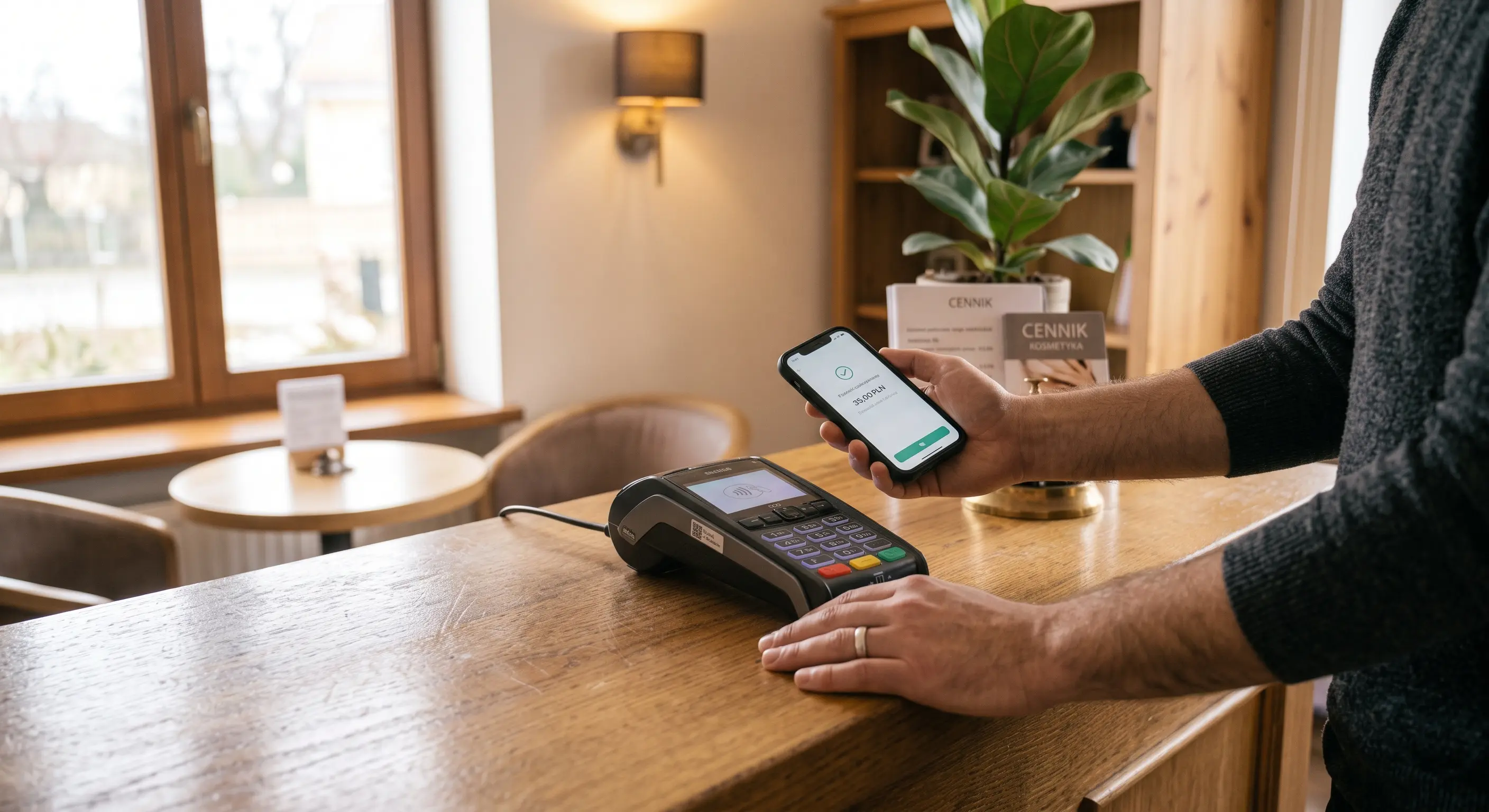
A small NFC stand or sticker sits on the table or next to the payment terminal. The guest holds their phone against it and the Google review form opens right away — no typing the venue name and no app. In a café with counter service it is best placed right next to the terminal, because the customer is holding their phone anyway. In a table-service restaurant, the table where the guest spends the most time works well.
Take care of your Google Business Profile
and climb higher in the rankings
Sign up and get a free course — learn how to optimize your Google Business Profile yourself, so your business appears higher in local search results.
No spam. Unsubscribe anytime.
How to respond to difficult reviews in hospitality?
In hospitality a negative review can appear for reasons the venue does not control: a long wait at peak hours, a problem in the kitchen, a guest having a bad day. With so many people served you cannot avoid every complaint — but you can make sure none goes unanswered.
What to do when a guest is unhappy with a dish or the service?
It is best to react at the table — replace the dish, offer a refill or a discount on the next visit, before irritation turns into a public review. If a negative review appears anyway, reply calmly and specifically, without arguing. Other guests read such replies closely: they judge not the single incident, but how the venue handles problems. You will find ready-made reply templates in the article on how to respond to Google reviews.
Why does a legal review filter protect your venue from unfair ratings?
A legal review filter sends satisfied guests straight to Google, and offers unhappy ones an additional internal form for reporting a problem — without blocking anyone's access to a public rating. This is entirely different from the prohibited “review gating”, i.e. selecting customers before they leave a review. Thanks to such a filter the manager learns about a problem the same day and can resolve it privately.
“A rating on the map attracts a new guest, but it is regulars who keep the venue busy on a Tuesday at 3 p.m.”
How to turn a satisfied guest into a regular customer?
A Google review is only the beginning of the relationship. A guest who has just scanned the NFC stand is at the perfect moment to also leave their contact details and marketing consent — and then the same stand starts working not only for ratings, but for repeat visits.
Why are regulars the most valuable guests in hospitality?
A regular orders more often, needs no expensive campaigns and recommends the venue to friends. In a café that someone drops into every day on the way to work, a loyal customer is worth more than a dozen random tourists. That is why collecting a phone number and GDPR consent at the moment of the rating is an investment that pays off with every following visit.
How do SMS coupons and a loyalty card support repeat visits?
A short SMS with a dessert coupon for a quieter day of the week can fill tables exactly when they are usually empty. A digital loyalty card — for example a free coffee after the fifth visit — gives the guest a reason to choose this venue. You will find a detailed guide to building such a system in the article on a loyalty program without an app, where we also describe reward thresholds for different industries.
Summary — how do restaurants and cafés get more reviews?
In hospitality the choice of venue is decided by the stars visible on the map, so the number and freshness of reviews matter as much as the average rating itself. The key is to ask for a review at the moment of greatest satisfaction — at the bill or when paying — and to remove every technological barrier that could put the guest off. An NFC stand does this in a fraction of a second, and the same carrier can also collect contact details and power SMS coupons and a loyalty card, turning one-time guests into regular customers.
FAQ — Frequently asked questions
- Should waiters personally ask guests for a Google review?
- They do not have to. An NFC stand on the table or at the till encourages the guest to leave a rating without staff involvement, so nobody feels pressured and the waiter does not lose time at peak hours.
- When is the best time to ask for a review in a restaurant or café?
- At the bill or right after paying, when the meal is over, impressions are fresh and the phone is at hand. Asking mid-meal can be intrusive, and a guest asked later usually forgets.
- Does a guest need to download an app to leave a review via the NFC stand?
- No. They only need to hold their phone against the stand — the Google review form opens in the browser, with no app installation, no account and no typing the venue name.
- What to do if a guest is unhappy with a dish or the service?
- React at the table — replace the dish or offer compensation. If a negative review still appears, reply calmly and specifically, without arguing; other guests will judge mainly how the venue solves problems.
- Can the same NFC stand collect reviews and run a loyalty card?
- Yes. One NFC carrier can send a satisfied guest to the Google review form and register their visit on a digital loyalty card at the same time — with no extra hardware and no app.
Viktor Bobiński
Starlinkee
Founder of Starlinkee and an expert in marketing, sales and IT. He specialises in NFC systems for collecting Google reviews and profile-ranking strategies for local businesses — from restaurants to salons and reception desks.
Related articles
How to Get Google Reviews Fast? Automation and Guidelines
Find out how to legally and effectively collect Google reviews. Learn when to ask for a review, which barriers to remove, and why an NFC system changes the game.
Google Reviews for Hair Salons and Barbershops: How to Get More Ratings
Find out how hair salons, barbershops and beauty salons can get more Google reviews. Learn when to ask for a review, how to handle difficult reviews, and how to link them to customer loyalty.